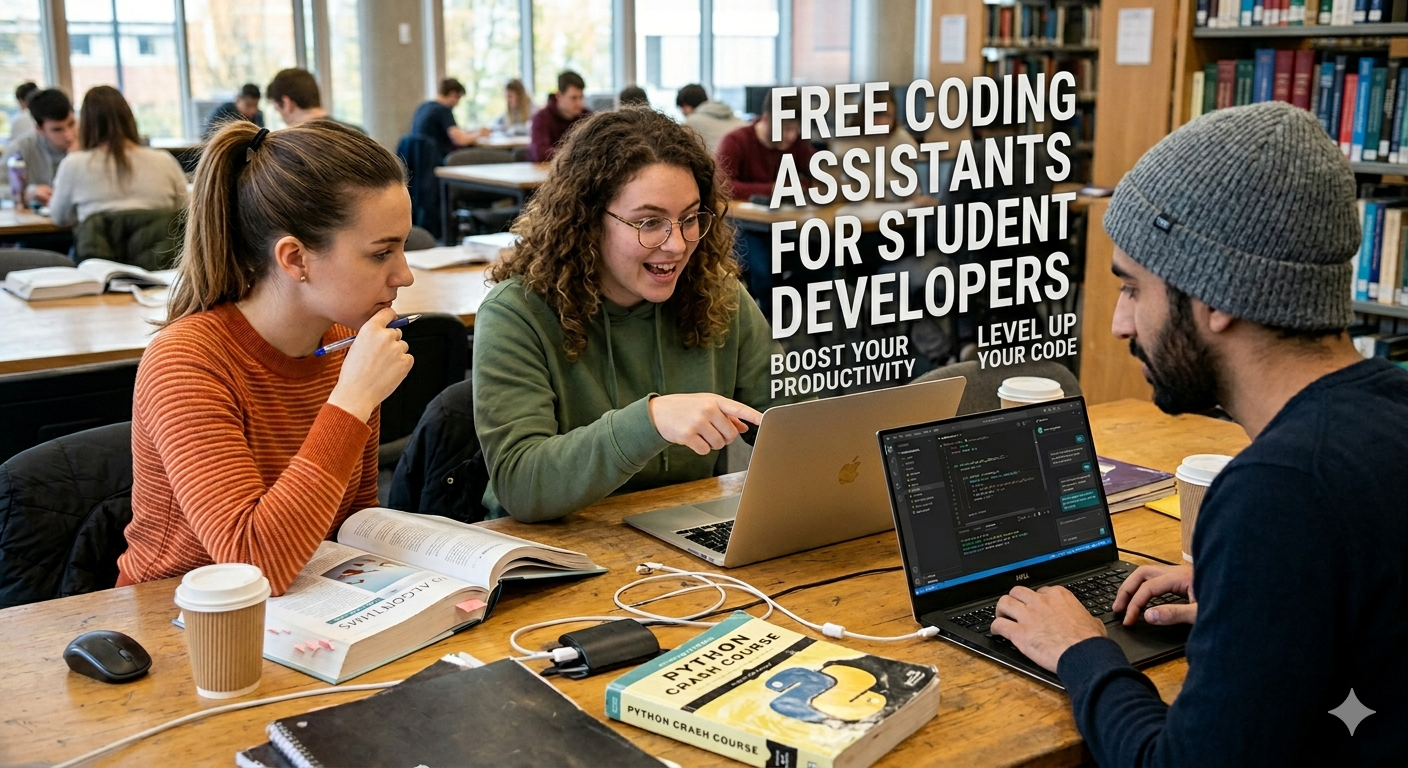
Free coding assistants for student developers have revolutionized how programming is learned and practiced in the modern era. As education costs continue to rise and the demand for technical skills accelerates globally, these digital tools provide essential support to students navigating complex coding challenges. This comprehensive guide explores the landscape of free AI powered programming aids, analyzing their features, benefits, and practical applications for the next generation of software creators.
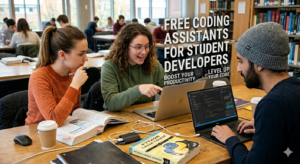
The journey of learning to code is often marked by periods of intense frustration and significant breakthroughs. For decades, students relied solely on textbooks, limited instructor availability, and online forums like Stack Overflow for guidance. While these resources remain valuable, the introduction of intelligent coding companions has introduced a new dynamic to technical education. These assistants integrate directly into the integrated development environment, or IDE, offering real time suggestions, debugging help, and explanations that were previously unavailable without human intervention.
For student developers operating on tight budgets, the availability of high quality free tools is a game changer. These resources democratize access to advanced learning aids, leveling the playing field between students at well funded institutions and those teaching themselves in less resourced environments. The primary value of a free coding assistant lies not just in its ability to generate code, but in its capacity to serve as a persistent, patient tutor that is available twenty four hours a day.
When assessing the landscape of free coding assistants, it is useful to categorize them based on their primary functionality and delivery method. Some operate as browser extensions, while others are deeply integrated plugins for popular editors like Visual Studio Code, or VS Code. Each type offers distinct advantages depending on the student’s current task and preferred workflow.
The most common and perhaps immediately useful feature of these assistants is intelligent code autocompletion. Unlike traditional autocomplete, which merely suggests variable names or method signatures based on static analysis, AI powered assistants understand the context of the code being written. They can predict entire blocks of code, implement common design patterns, and suggest idiomatically correct syntax for the language in use. For students, this speeds up the writing process and introduces them to best practices in real time.
Another significant area where free coding assistants excel is in debugging and error resolution. Identifying the source of a bug is often the most time consuming part of development, particularly for beginners. Many modern assistants can analyze error messages, explain what they mean in plain English, and suggest potential fixes. This immediate feedback loop is crucial for learning. Instead of spending hours scouring documentation for a missed semicolon or an incorrect variable scope, students can understand the mistake and move forward quickly.
Code explanation is a feature specifically valuable for educational purposes. When a student encounters a complex algorithm or inherits a legacy codebase, they can use the assistant to break down the logic line by line. This process helps demystify abstract concepts and provides a concrete understanding of how different components interact within a larger system. Some assistants even allow students to ask questions about the code, such as “why was this loop used here?” or “what is the time complexity of this function?”, facilitating a deeper level of engagement with the material.
Refactoring and optimization are advanced skills that students must eventually master. Several free coding companions offer suggestions on how to make existing code cleaner, more efficient, or more Pythonic (or idiomatic to whatever language is being used). These suggestions might include replacing a verbose loop with a list comprehension, identifying redundant calculations, or recommending more appropriate data structures. By reviewing these recommendations, student developers gradually internalize the principles of high quality software architecture.
One of the most popular tools currently available is GitHub Copilot, which offers a free subscription tier for students through the GitHub Student Developer Pack. Copilot is known for its powerful code generation capabilities, drawing on a vast repository of public code to provide context aware suggestions. Its integration with VS Code and other JetBrains IDEs makes it incredibly convenient. For many students, Copilot acts as an exceptionally knowledgeable pair programmer, guiding them through the implementation of unfamiliar libraries and complex logical structures.
Another strong contender in the free space is Tabnine. This tool focuses heavily on code completion and works across a wide range of IDEs and programming languages. Tabnine uses deep learning models to predict the next lines of code based on the current file and project context. A significant advantage for some developers is Tabnine’s commitment to privacy, as it offers local models that run on the user’s machine, ensuring that proprietary or sensitive school project code does not leave the local environment.
Codeium is a relatively newer addition that has gained significant traction by offering a generous free tier for individuals. It provides autocomplete, intelligent search, and a chat interface within the IDE. The chat feature allows students to generate boilerplate, write unit tests, and ask general programming questions without switching context to a web browser. Codeium’s ease of use and rapid performance make it an attractive option for students who need a responsive and versatile assistant.
Beyond these dedicated code generators, general large language models, or LLMs, like ChatGPT and Claude also serve as effective, though slightly detached, coding assistants. While they require the student to copy and paste code back and forth, they excel at high level architectural planning, explaining complex theoretical concepts, and translating code from one programming language to another. They can act as an on demand tutor, helping students understand the “why” behind software design decisions rather than just the “how”.
The responsible use of these tools is a critical topic that educational institutions and students must navigate. Relying too heavily on an assistant to generate solutions can inhibit the development of fundamental problem solving skills. It is essential for students to use these tools as aids for learning, not as crutches to bypass the necessary intellectual labor of programming. The true value of a coding assistant is realized when it helps a student overcome a specific hurdle, enabling them to understand the underlying logic and then apply that knowledge independently in the future.
Furthermore, academic integrity is a paramount concern. Overreliance on generated code without understanding or attribution can lead to situations that violate institutional policies. Students should always consult with their instructors regarding the acceptable use of AI assistants in their coursework. In many cases, using an assistant to understand an error or research a concept is acceptable, while using it to write an entire assignment is not. The key is transparency and using the tool to enhance, not replace, the learning process.
Despite these considerations, the advantages of integrating free coding assistants into the student workflow are undeniable. They accelerate the learning curve, provide instantaneous support, and expose students to industry standard practices very early in their careers. As these technologies continue to evolve, they will undoubtedly become even more sophisticated, offering personalized learning paths and identifying specific areas where a student may need more practice or theoretical grounding.
The future of programming education lies in finding the optimal balance between human instruction and algorithmic assistance. Educators will increasingly focus on teaching high level design, critical thinking, and system architecture, while AI companions handle the syntax nuances, boilerplate code, and basic debugging. For student developers, mastering the effective and ethical use of these tools is now as important as learning the syntax of Python, Java, or C++.
In conclusion, free coding assistants represent a profound shift in how computer science and software engineering are learned. They offer unprecedented levels of support, making programming more accessible and less intimidating for beginners.
By providing real time feedback, intelligent suggestions, and explanations, these tools empower student developers to build more complex applications, experiment more freely, and ultimately become more proficient engineers.
As long as they are used responsibly and as a complement to fundamental learning, these digital companions are indispensable resources for the next generation of technology innovators. The ability to leverage these tools effectively will soon be a prerequisite for success in the rapidly evolving field of software development, and students who embrace them early will find themselves well prepared for the challenges of the modern tech landscape.
The availability of these powerful assistants at no cost ensures that this future is open to all dedicated students, regardless of their financial circumstances, further enriching the diversity and potential of the global developer community.
About The Author