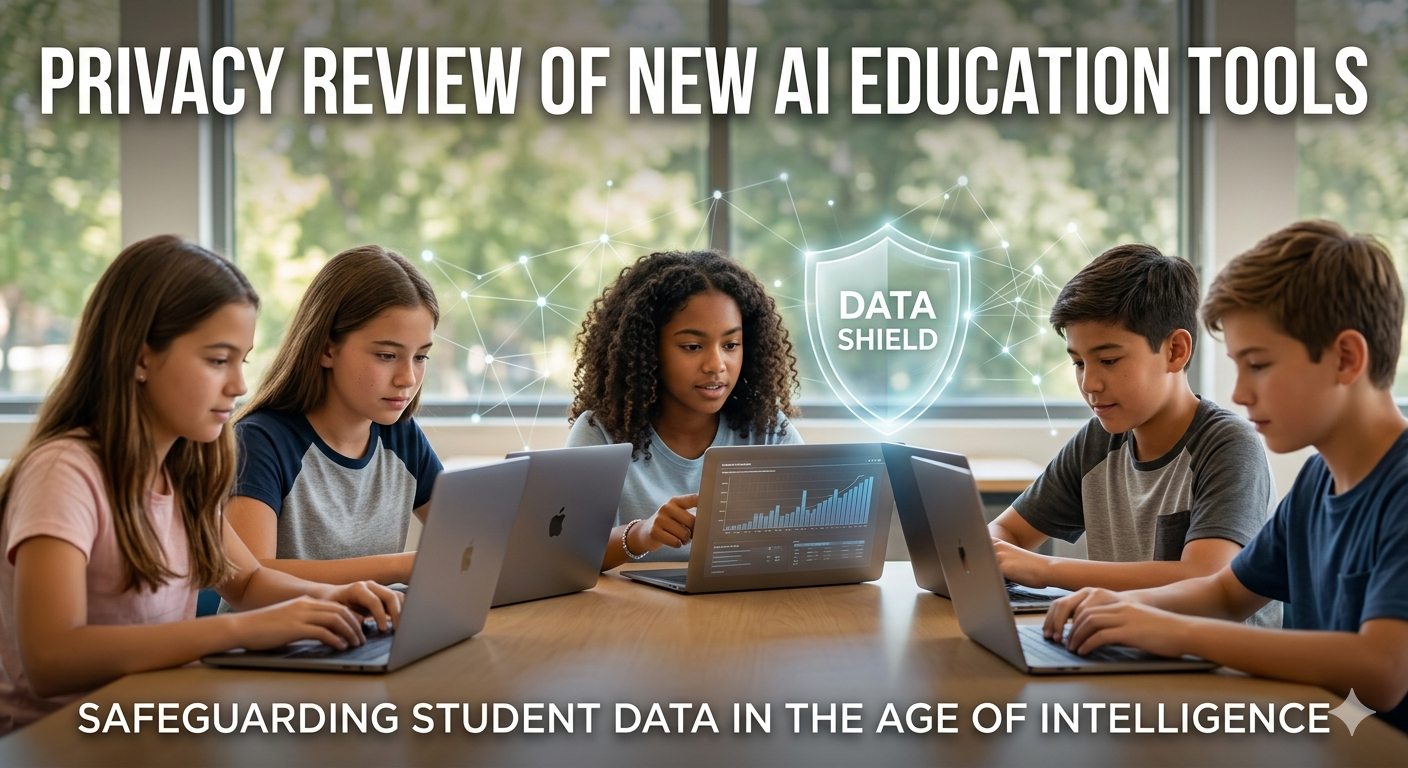
Privacy Review of New AI Education Tools: Protecting Student Data in the Age of Intelligence
The integration of artificial intelligence into the classroom is no longer a futuristic concept but a present day reality that is reshaping the educational landscape. From personalized learning platforms to automated grading systems, AI tools offer unprecedented opportunities to enhance student engagement and streamline administrative tasks. However, this technological revolution brings with it a complex set of challenges regarding data security and individual rights. A comprehensive privacy review of new AI education tools is essential to ensure that the benefits of innovation do not come at the cost of student safety or legal compliance. This guide examines the critical intersections of technology and privacy, offering a roadmap for educators, parents, and policymakers.
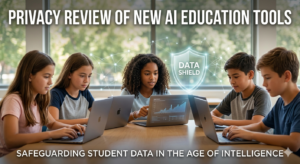
The Magnitude of Data Collection in Modern Classrooms
To appreciate the privacy implications of AI in education, one must first understand the sheer volume of information these systems process. Unlike traditional software that operates on static inputs, artificial intelligence thrives on data. The more information an algorithm has, the more effectively it can predict student needs or adapt content. This creates a powerful incentive for developers to collect as much data as possible.
The types of information harvested by these tools range from basic personal identifiers like names and email addresses to highly sensitive behavioral data. AI systems often track how long a student spends on a specific task, where they struggle, their communication styles, and even their emotional responses through facial recognition or sentiment analysis. When this level of detail is aggregated over months or years, it creates a digital footprint that is incredibly descriptive. The potential for misuse of this information is significant, as it could be used for unauthorized profiling or targeted advertising that exploits a student’s developmental vulnerabilities.
Navigating the Regulatory Landscape: FERPA and GDPR
Ensuring that AI tools are safe for classroom use requires a deep understanding of the regulatory frameworks designed to protect children and students. In the United States, the Family Educational Rights and Privacy Act, commonly known as FERPA, sets the standard for protecting the privacy of student education records. FERPA generally requires that schools obtain written permission from parents before disclosing a student’s record, though there are exceptions for school officials with legitimate educational interests.
On the global stage, the General Data Protection Regulation, or GDPR, has introduced even more stringent requirements. For educational technology providers operating in or serving students in the European Union, GDPR mandates data minimization, purpose limitation, and the right to be forgotten. These regulations are not merely bureaucratic hurdles; they are essential safeguards. Any educational institution implementing an AI tool must conduct a rigorous audit to ensure that the software’s data collection and storage practices align with these laws. Failure to do so can lead to severe legal consequences and a total loss of community trust.
The Necessity of Transparency and Clear Policies
Trust is the foundation of the relationship between an educational institution and the families it serves. When schools introduce complex AI systems that many parents may not fully understand, transparency becomes the most effective tool for building and maintaining that trust. It is not enough for a school to simply state that a tool is safe; they must demonstrate it through clear and concise privacy policies.
A high quality privacy policy for an AI education tool should be written in plain language that a non technical parent can understand. It should explicitly state what data is being collected, why it is necessary for the learning process, where it is stored, and who has access to it. Furthermore, these policies must define retention periods. Data should not be kept indefinitely. Once a student moves on or a specific educational goal is met, there should be a clear protocol for the secure deletion of their information. Transparency fosters a culture of accountability where developers are held to the standards they publish.
Third Party Access and the Vendor Vetting Process
One of the most significant risks associated with educational technology is the sharing of data with third party entities. Many AI tools are built on top of external cloud services or utilize third party analytics packages to monitor performance. In some cases, data collected in a classroom setting might be shared with vendors for marketing purposes or sold to data brokers. This is a critical point of failure in the privacy chain.
Educational institutions must take an active role in vetting every third party partnership associated with the tools they adopt. This involves more than just reading a service agreement. Schools should establish legally binding contracts that prioritize data privacy and explicitly prohibit the sale of student information. Regular audits are necessary to ensure that these vendors are adhering to the agreed upon standards. Unauthorized access to sensitive information is often the result of a weak link in a long chain of providers, and it is the school’s responsibility to ensure that every link is secure.
Establishing Clear Guidelines on Data Ownership
The question of who owns the data generated by a student is a relatively new but vital concern. When an AI tool helps a student write an essay or solve a complex math problem, a significant amount of intellectual and behavioral data is created. Does this data belong to the student, the school, or the company that provided the software?
Without clear guidelines, the default often favors the technology provider, which can lead to situations where a student’s personal growth and academic history are monetized without their consent. Schools must empower families by clarifying these ownership rights. Ideally, the data should remain under the control of the student or their legal guardians. Families should have the right to access their data, port it to other services, or request its destruction. By establishing these rights early, educational institutions protect the long term interests of their students and prevent the creation of permanent digital dossiers that could follow a child into adulthood.
Addressing Algorithmic Bias and Fairness
Beyond the technical aspects of data security lies the ethical challenge of algorithmic bias. AI models are trained on historical data, which often contains human biases. If an AI tool used for grading or college recommendations is trained on biased datasets, it can inadvertently perpetuate discrimination against certain groups of students.
A thorough privacy and ethical review must include an analysis of the algorithm’s fairness. Educators should ask developers how their models were trained and what steps were taken to mitigate bias. Protecting a student’s privacy is not just about keeping their name secret; it is also about protecting them from being unfairly categorized or disadvantaged by an automated system. Fairness and privacy are two sides of the same coin in the digital classroom.
The Role of Educators in Digital Stewardship
While technology providers and policymakers hold a great deal of responsibility, the role of the individual teacher cannot be overlooked. Educators are the primary interface between the student and the AI tool. As such, they must be trained as digital stewards who understand the privacy implications of the software they use.
Professional development programs should include modules on data literacy and privacy best practices. Teachers need to know how to identify red flags in a tool’s behavior and how to explain privacy settings to their students. When educators are informed, they can guide students in using AI responsibly, helping them understand that their data has value and deserves protection. This bottom up approach ensures that privacy considerations are integrated into the daily fabric of the learning experience.
Building a Secure and Responsible Learning Environment
The goal of a privacy review is not to hinder the adoption of AI but to ensure its responsible implementation. When schools prioritize student privacy, they create a secure environment where innovation can flourish. A secure learning environment is one where students feel safe to explore, make mistakes, and grow without the fear of being monitored or exploited.
This requires a multi layered approach that combines technical safeguards, legal protections, and ethical considerations. Schools should implement robust encryption for data in transit and at rest. They should utilize multi factor authentication for access to administrative panels. Most importantly, they should foster a community dialogue where parents and students are invited to share their concerns and participate in the decision making process. When everyone is on the same page, the school can move forward with confidence, leveraging the best that AI has to offer while keeping its most vulnerable members safe.
The Importance of Ongoing Dialogue and Collaboration
The landscape of artificial intelligence is evolving at a breakneck pace. A tool that is considered safe today may develop new features tomorrow that introduce unforeseen privacy risks. Therefore, a privacy review is not a one time event but an ongoing process.
There must be a continuous dialogue between technology providers, educators, and policymakers. Providers must be willing to listen to the concerns of the education community and adapt their tools accordingly. Policymakers must stay updated on technological trends to ensure that regulations remain relevant and effective. Educators must share their experiences and best practices with their peers. This collaborative spirit is essential for addressing the privacy challenges of the future. By working together, the education sector can establish a set of universal standards that protect student privacy across all platforms and jurisdictions.
Conclusion: Balancing Innovation and Fundamental Rights
Artificial intelligence has the potential to be the greatest educational equalizer of our time, providing personalized support to every student regardless of their background. However, this potential can only be realized if we remain vigilant about the privacy risks involved. The fundamental right to privacy is not a luxury that can be traded for convenience or efficiency; it is a cornerstone of a free and democratic society.
Read more
Conducting a thorough privacy review of new AI education tools is an act of advocacy for students. It ensures that their data is treated with the respect it deserves and that their future opportunities are not limited by automated profiling. As we navigate this rapidly changing landscape, let us commit to a future where technology serves humanity, rather than the other way around. By prioritizing transparency, accountability, and student agency, we can build a digital learning environment that is both innovative and profoundly secure. The journey toward responsible AI in education is complex, but it is one that we must undertake with courage and a steadfast commitment to the well being of the next generation. Through careful review and constant vigilance, we can harness the power of AI to create a brighter, more equitable future for all learners while safeguarding their most precious personal information.
About The Author